
Conscious Nutrition · Moodboards
The quiet language of spices.

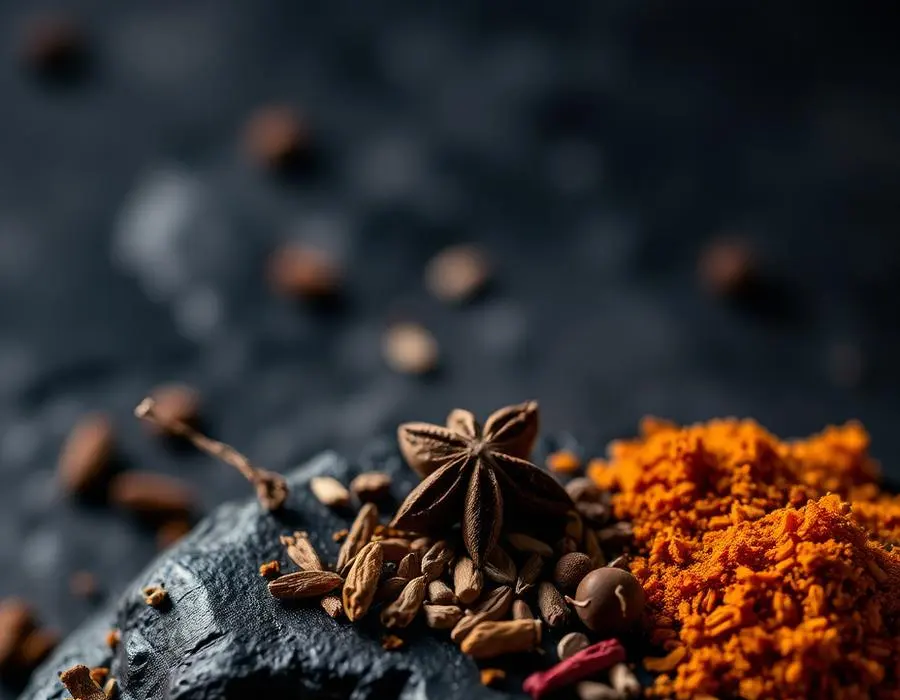
A well-kept spice drawer does more for everyday cooking than any appliance. It is also the cheapest way to stop repeating yourself at dinner.
Spices are not decoration. Each one does a specific job, and once you know the job, the guessing stops.
Warmth: cinnamon, clove, star anise
These carry sweetness without sugar. A single star anise in a braise, a clove in rice, a short stick of cinnamon in a tomato sauce - each rounds an edge that salt cannot reach.
Use them sparingly and whole where possible. Ground, they dominate; whole, they perfume and then step back.
Colour and earth: turmeric, paprika, cumin
Turmeric brings colour and a faint bitterness that needs fat to soften. Paprika brings sweetness and smoke. Cumin brings the earthiness that makes a dish taste cooked rather than assembled.
All three want heat before liquid. Thirty seconds in warm oil is the difference between a spice you can taste and a spice you can only see.
Lift: coriander seed, black pepper, citrus zest
Every rich dish needs something to keep it from sitting heavily. Crushed coriander seed, pepper ground at the end rather than the beginning, a strip of lemon peel added late - these are the finishing notes.
Add them last. Their volatile oils are the first thing long cooking destroys.
Keep them alive
Whole spices hold their character for a year or more. Ground ones fade in months, faster in a warm cupboard above the stove. Buy small quantities, store them dark and cool, and toast them just before use.
A drawer of fresh spices turns plain ingredients into a meal worth sitting down for - which is, in the end, the entire point.